Unless you live under a rock, you've probably heard all about Microsoft's new next gen console, the Xbox One. All personal opinions aside, the Xbox One looks to be a very powerful console that hopes to compete with PC's, Blu-Ray players, web boxes, and your TV in the next generation. But is all of that really necessary? And after what Microsoft gave us two weeks ago in their excuse for a console press conference what can we really expect from their next gen console? Luckily I'm here to help crack this issue wide open and give you some strong predictions for what will happen both at E3 this week and before we see the Xbox One (Night Stand) before it hits shelves in November.
So, for those of you who joined in on the live feed for Microsoft's press conference you may have noticed a sever lack of one thing that every video game console needs, video games. I mean the only thing we really saw was a nice 5 minute long commercial for the new Call of Duty: Ghosts. That's it. Nothing more. And don't even try to bring up the EA Sports thing as an argument for us seeing a video game, because by now we've all filed them under the "not games, just pocket pickers" category. And I know that games are announced, and already have trailers, but we saw nothing in the lines of gameplay. And that is the key to selling a next generation console.
However a distinct lack of games are not my only vocal concerns about what is in store for us. My biggest concerns is an isolation of games altogether in the next generation. Clearly neither the PS4 or Xbox One are being targeted at games specifically, which is a funny thing for a VIDEO GAME CONSOLE. I want to say that one more time. The PS4 and Xbox One are VIDEO GAME CONSOLES. Not home entertainment systems, not a big brother machine, not ET that can't go a day without talking to its mommy, and definitely not a cable box. They're VIDEO GAME CONSOLES. So why the hell are Microsoft and Sony trying to pass them off as more than that? That is a serious mistake. They need to refocus, understand who exactly will be the most likely to buy their console, and focus their marketing toward them. Nintendo did that with the WiiU, and because of that, the WiiU was a huge success.
Microsoft and Sony however are not focusing on the games, even though Sony has claimed that "the PS3 is for video games". This is the same garbage we heard when they announced the current generation, and its the same garbage their giving us now. The only real change that will ever happen is when we, as consumers, those who hold the almighty dollar and decide the fate of the console, decide not to buy into their bullshit and start buying only the console that offers us a video game experience that we want, not the TV experience we don't. That is the only way that we come out ahead.
I will say, the one thing that I do like about the new generation is the ability to take direct screen shots and videos and add them to social media. It allows people with little to no experience in doing this an option for sharing their gameplay experiences with the rest of the world without the use of expensive equipment.
But this week, I'm hopeful, even though it may be foolish. I'm hopeful that Microsoft will get their heads out of their asses and actually give us what we want. Hopeful that Sony has a piece of hardware to give us, and a game to play on it. Hopeful that David Cage finally gets the quality of graphics that he dreams of so that we can put this whole emotion in games bullshit aside. And finally, I'm hopeful that Square Enix won't announce four new games that we'll never see.
Hope this week turns some of this around, but don't hold your breathe. See ya next time!
Showing posts with label Game Industry. Show all posts
Showing posts with label Game Industry. Show all posts
Monday, June 10, 2013

Monday, June 25, 2012
Developers vs Designers
So remember how a few weeks ago I told you something special was on its way? As I told you, I will deliver. Here at Breaking The Mold we value education of the general populace about quite honestly many things, from videogames to movies, entertainment to politics. Now along with that I must also include awareness of issues and the encouragement to form your own ideas. To us, this is paramount if we, as a society, are to advance and understand more. It's like GI Joe put it, knowledge is power, and knowing is half the battle. Think of it, the more we know, the more ready we are to form our own ideas and opinions. So this is going to be kicking off a series of informational posts about pretty much whatever comes to the table and whatever we feel like. So without further ado, I introduce the first topic: The Difference between Game Designers and Game Developers.
Okay so why cover this topic? Well quite simple, many people don't know the difference. People who play games and discuss games say they understand what the difference is, but in all reality they more than likely don't, and that's just fact. I will admit it is a thin line and can be very hard to distinguish without looking closely. But together were going to get to the bottom of it.
Okay so Developers and Designers often get used as interchangeable words, but they're not, they are two completely separate entities what work in separate departments of a game company. A good way to look at it is by looking at the words: designers create the rules, sculpt the setting, and see to it that players have the emotional experience they are supposed to. While on the other hand a developer is in charge of the system that allows a designer to do this, from building the code to maintaining the database. That doesn't really justify it though, so lets take a bit of a closer look.
Were going to start off with Designers since it does happen to be the more commonly used of the terms and also has the biggest variety. Now a designer, like I said earlier, is the person that sits down and applies creativity to the game. Designers design the game. They are in charge of the rules, what the game does when a player performs an action, and the way the game looks and feels. They are the artistic minds behind the game. It is a designers sole responsibility to make sure that every creative aspect of a game is complete and concise, and to make sure that the game is well balanced and fair to all players. Designers do everything from art, writing, rules, and even plot out the emotional journeys.
On the flip side a Developer, like I said, is someone who sits down and actually works on the systems of the game. These are your Computer Programmers, the Systems Engineers, and Engines Developers. These are people who are constantly looking at code and taking what the designers make and translating that to a working and moving executable. The Developers are the ones who are constantly staring at a computer screen, and are often the ones who will also be required to stay in late nights to meet deadlines. All of the interactive physics, AI, hit detection, online communications, and even the scripting are responsibilities of the developers.
These are very easy to confuse and it honestly isn't hard to understand why. A lot of people think that everyone in the game industry can do anything they want but that can't be any further from the truth. I've had countless conversations with people where they say that the developers should change rule x, or the designers should have counted wind into the physics engine. It just doesn't work that way, in order to do even a minor change to a basic element when the project is pretty far down the pipeline is very tough to implement a major change, but that gets down into software development which we wont discuss here.
One final thing that I would like to point out is that all good games are built in a specific way and not just in a manner of "I have an idea so lets run with it". Usually the designers get to work on the games rules and systems while the developers do their setup processes so once the design documents and specifications are outlines all of the base coding, i.e. objects, data structures, system layout, are all done so the development team can dive head first into the game when the time comes. Ideally you have your developers working on a project while the designers are polishing the final stages of story, levels, and endgame upgrades/abilities and when the designers finish they start working on the next project so the developers have something to do after they launch their current project. But things don't always work out this way. The image below should clarify some of this, the red is designers and blue is developers.

This is just a very brief overview of a few aspects of the game industry, and by no means is it a complete accurate telling of how everything works, mainly because it varies from company to company. But hopefully now you under stand how these things are done and things are put together in a better light. Peace out guys.
Okay so why cover this topic? Well quite simple, many people don't know the difference. People who play games and discuss games say they understand what the difference is, but in all reality they more than likely don't, and that's just fact. I will admit it is a thin line and can be very hard to distinguish without looking closely. But together were going to get to the bottom of it.
 |
| We all have our own skewed view of things. |
Okay so Developers and Designers often get used as interchangeable words, but they're not, they are two completely separate entities what work in separate departments of a game company. A good way to look at it is by looking at the words: designers create the rules, sculpt the setting, and see to it that players have the emotional experience they are supposed to. While on the other hand a developer is in charge of the system that allows a designer to do this, from building the code to maintaining the database. That doesn't really justify it though, so lets take a bit of a closer look.
Were going to start off with Designers since it does happen to be the more commonly used of the terms and also has the biggest variety. Now a designer, like I said earlier, is the person that sits down and applies creativity to the game. Designers design the game. They are in charge of the rules, what the game does when a player performs an action, and the way the game looks and feels. They are the artistic minds behind the game. It is a designers sole responsibility to make sure that every creative aspect of a game is complete and concise, and to make sure that the game is well balanced and fair to all players. Designers do everything from art, writing, rules, and even plot out the emotional journeys.
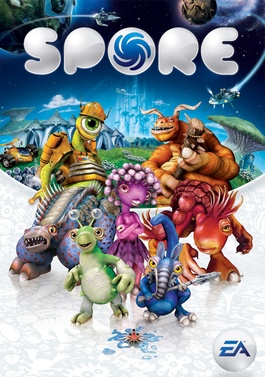 |
| Spore lets the players do some designing. |
On the flip side a Developer, like I said, is someone who sits down and actually works on the systems of the game. These are your Computer Programmers, the Systems Engineers, and Engines Developers. These are people who are constantly looking at code and taking what the designers make and translating that to a working and moving executable. The Developers are the ones who are constantly staring at a computer screen, and are often the ones who will also be required to stay in late nights to meet deadlines. All of the interactive physics, AI, hit detection, online communications, and even the scripting are responsibilities of the developers.
These are very easy to confuse and it honestly isn't hard to understand why. A lot of people think that everyone in the game industry can do anything they want but that can't be any further from the truth. I've had countless conversations with people where they say that the developers should change rule x, or the designers should have counted wind into the physics engine. It just doesn't work that way, in order to do even a minor change to a basic element when the project is pretty far down the pipeline is very tough to implement a major change, but that gets down into software development which we wont discuss here.
One final thing that I would like to point out is that all good games are built in a specific way and not just in a manner of "I have an idea so lets run with it". Usually the designers get to work on the games rules and systems while the developers do their setup processes so once the design documents and specifications are outlines all of the base coding, i.e. objects, data structures, system layout, are all done so the development team can dive head first into the game when the time comes. Ideally you have your developers working on a project while the designers are polishing the final stages of story, levels, and endgame upgrades/abilities and when the designers finish they start working on the next project so the developers have something to do after they launch their current project. But things don't always work out this way. The image below should clarify some of this, the red is designers and blue is developers.

This is just a very brief overview of a few aspects of the game industry, and by no means is it a complete accurate telling of how everything works, mainly because it varies from company to company. But hopefully now you under stand how these things are done and things are put together in a better light. Peace out guys.
Subscribe to:
Posts (Atom)